
 Skip to content
Access to alternative investments is increasingly in demand. Because while there is uncertainty in stock markets and confidence in some currencies is weakening due to incredibly large floods of money, investments such as cryptocurrencies are moving steeply past other asset classes. With the Relai Bitcoin App This opens up an uncomplicated Access to the largest cryptocurrency Bitcoin.
The Relai experiences show you how safe the app is, how you can reduce the Relai fees and what you should definitely look out for!
Test duration: Since February 2021 - over 4 years of active use
Currently ongoing: Weekly auto-invest of CHF 250 since March 2024 - works perfectly!
Last transactions:
Community Feedback: A Schwiizerfranke reader from Basel asked: "Can I send my Bitcoin directly from Relai to my hardware wallet?" - Yes, it works perfectly - in my test, the transfer to Ledger only took 15 minutes.
Next update: End of 2025 or in the event of significant changes to the Relai
Simplicity is the focus of the Relai app. The crypto app is not meant to buy countless currencies, but exactly one: Bitcoin. And this simple, straightforward, fast, without registration and without separate wallet or hours of research into how exactly this is done.
You rarely see anything like that today. Rather, people often jump on every bandwagon, and in the end, some service providers offer a lot, but nothing really good. The Relai App for Android and iOs was in the Switzerland develops and, according to its own statements, represents the fastest access to bitcoin dar.
The concept of the Relai app: Banks are forced to know or identify their customers. However, there is no identification procedure in the Relai app! Instead, the data of the transferring bank from which you transfer (fiat) money is sufficient to buy Bitcoin in the Relai app. This means that no data is collected from you and time is saved enormously. From the app download to the start of the function Only a few minutes.
The Relai app is a Full access to buy, hold and resell Bitcoin. In the screenshots below you can see how simple everything is kept and structured. It is important to write down your seed password and keep it in a safe place. If you lose or change your mobile phone, you can use the password to access your Bitcoins again.
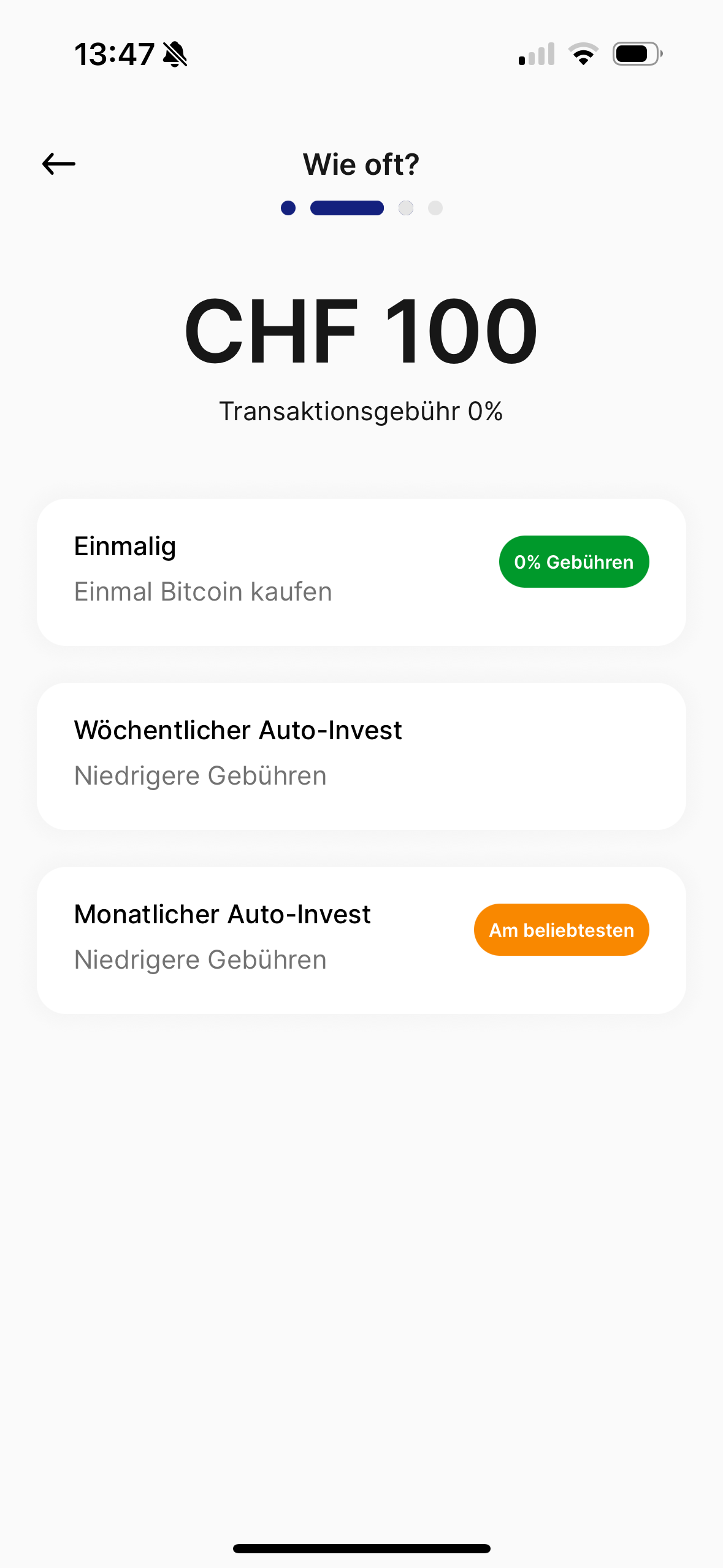
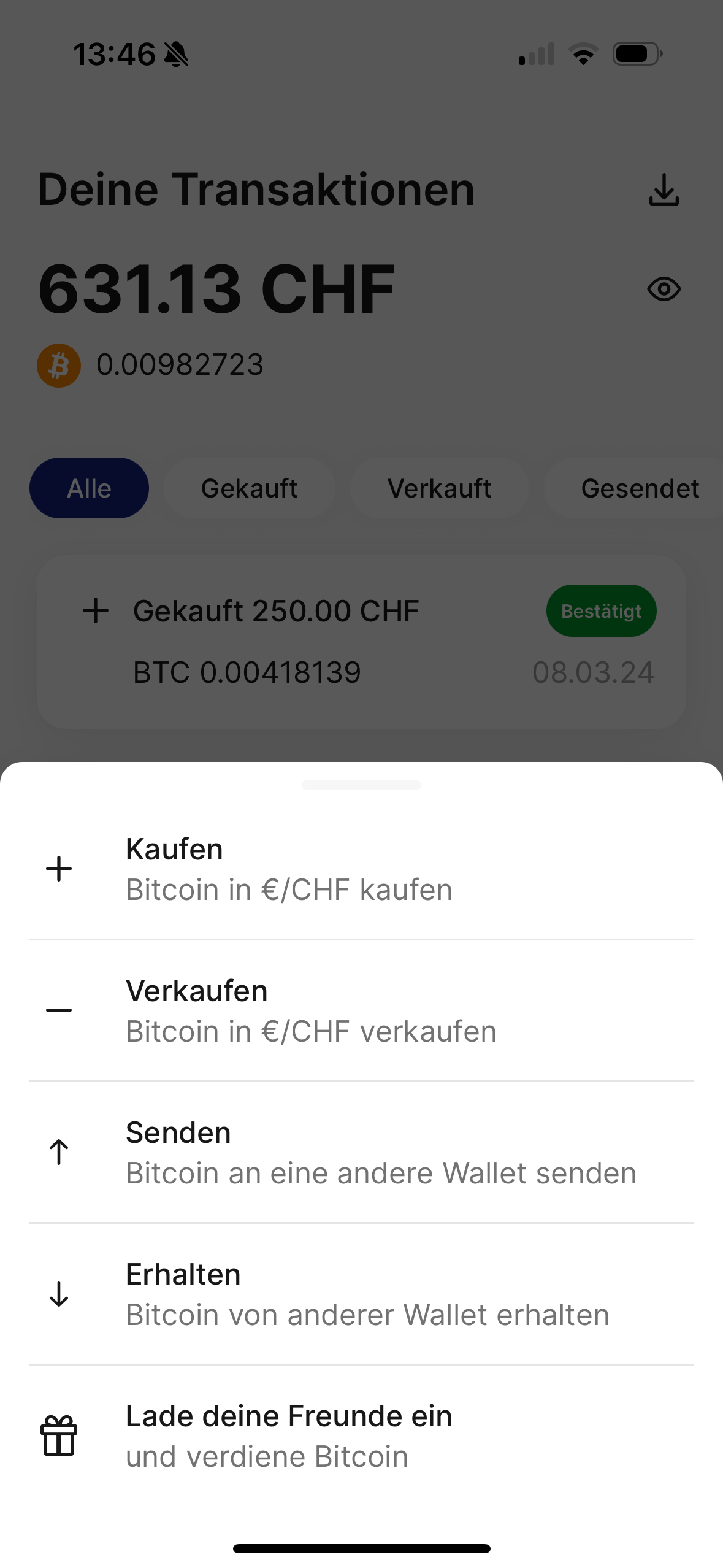
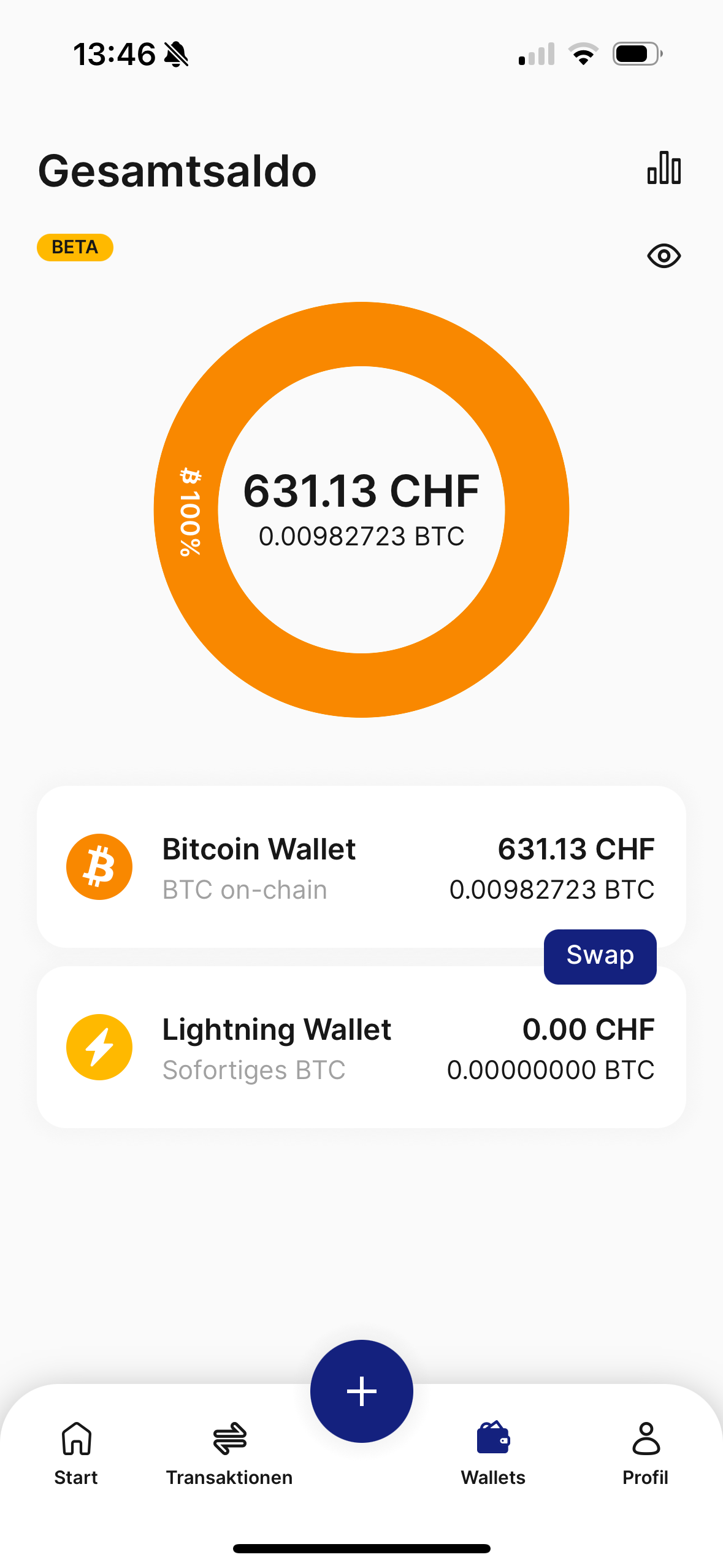
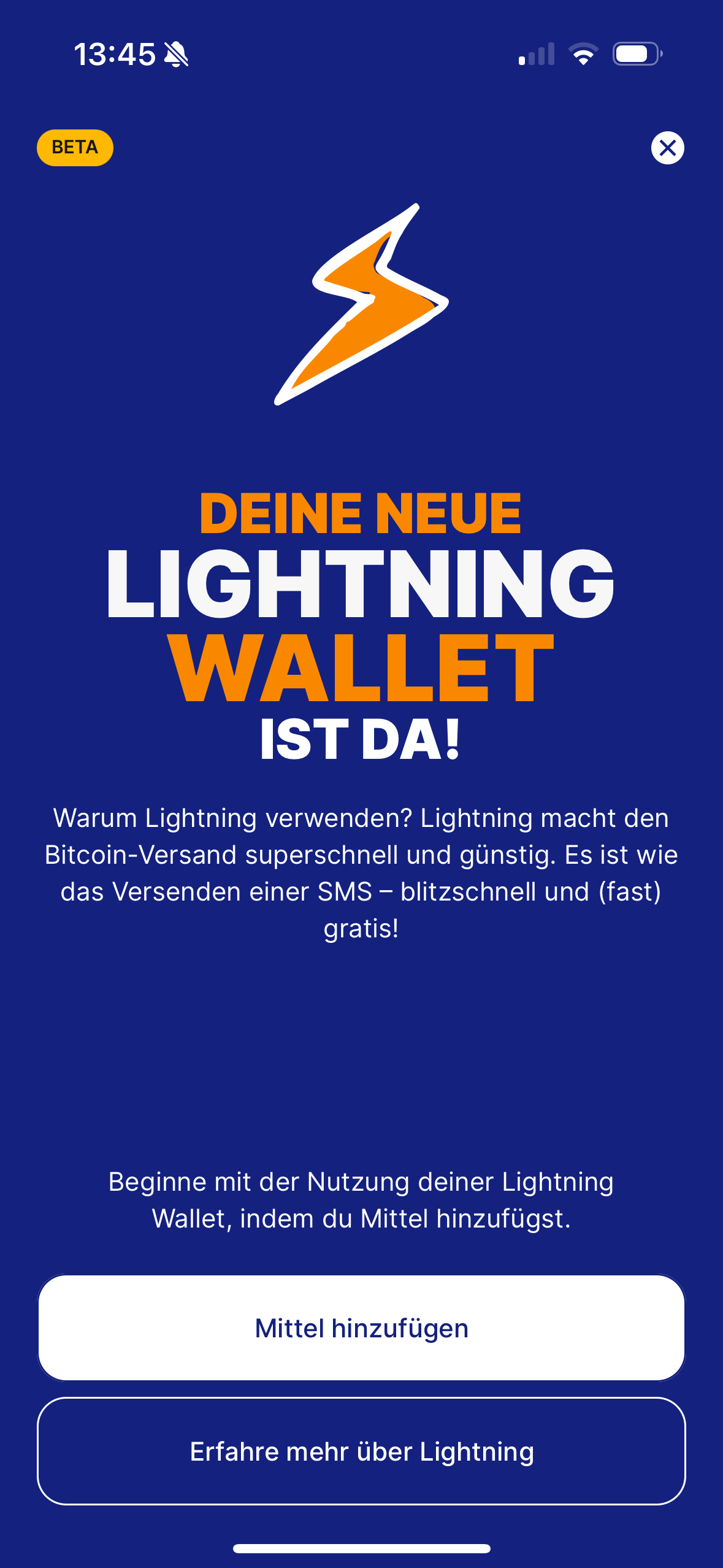
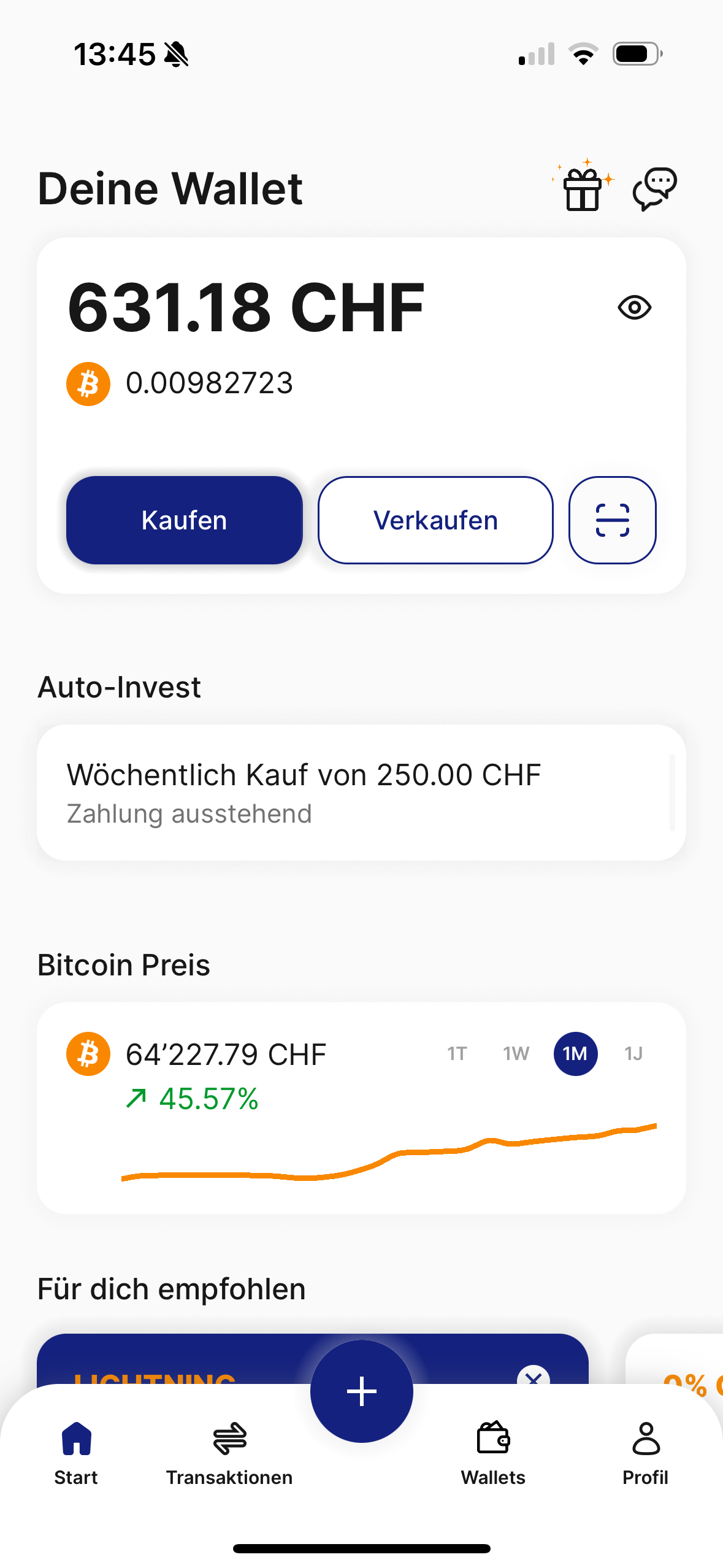
You can enter the CHFRANKE Relai referral code during the checkout process. After entering the amount, a field will appear in which you can enter your Relai referral code.
Directly on the blockchain or encrypted via the seed on your mobile phone.
No problem, as long as you have written down/saved your password (seed). Enter the seed on your new mobile phone and you're ready to go.
With the Relai voucher code CHFRANKE you save 0.5% fees on your purchases. Furthermore, you can buy up to CHF 1 Bitcoin per month at Relai for 0% fees, i.e. free of charge buy!
"Intelligent people learn from the mistakes of others".
We have compiled our top selection for you from all our tests and experience reports:



Security: People often ask "how secure is Relai"? Like any application that has to do with money, Relai is also subject to the principle of caution. If you buy really large amounts of Bitcoin, it is advisable not to store them permanently in the Relai app. To do this, you can transfer your coins from the app to your personal wallet.
For example, a Carry forward to the Relai Ledger (or to other wallets) very easily by clicking on "Send" in the Relai app and then entering the address of your wallet. Be sure to check that the address is correct and make a small test transfer at the beginning before sending larger amounts to Bitcoin.
The same is true, by the way, when you Sell Bitcoin want to sell. You can select "Sell" via the + (plus symbol) in the app and exchange your Bitcoin for Swiss francs.
The next step is to enter your account details for the payout and you are ready to sell your bitcoins. You may need to verify your wallet to "Level 2" first if you have not done so before. You can do this easily in the Relai app menu under "Profile" and then "My wallet level".
In the test, the Relai payout within one weekday.

After Neon and Findependent, the Relai Höhle der Löwen Switzerland appearance also took place on 30.11.21! You can find out exactly what Relai plans to do with the targeted investment in the coming months and what development steps are planned here. Major development steps for Relai 2.0 have already been taken in 2021 and published in the release in mid-November 2021. If you would like to get a closer look, you can download the Relai app for free. download. With our Promo code CHFRANKE you benefit from 0.1% less fees!
"Intelligent people learn from the mistakes of others".
We have compiled our top selection for you from all our tests and experience reports:
| Criterion | Relai | Bitpanda | Coinbase |
|---|---|---|---|
| 🏢 Origin | Switzerland (Zurich) | Austria | USA |
| 📱 Focus | Bitcoin only | 200+ cryptocurrencies | 100+ cryptocurrencies |
| 🎯 Target group | Bitcoin beginners | Crypto Trader | International users |
| 💰 Fees | 0.9% (with code CHFRANKE) | 1,49% – 2,49% | 0.5% - 4% + Spread |
| 🔐 Registration | KYC since 31 October 2024 | ✅ KYC required | ✅ KYC required |
| 🔑 Wallet control | ✅ Own keys | ❌ Custodial | ❌ Custodial |
| 💸 Minimum amount | CHF 25 | CHF/EUR 25 | USD 2 |
| ⚡ Lightning Network | Yes (Beta) | ❌ No | ❌ No |
| 🎁 Free purchases | ✅ 1x per month up to CHF 100 | ❌ No | ❌ No |
| 📞 Support | German | German | English |
| 🏦 CHF support | Native | Via EUR conversion | ❌ Detour via EUR/USD |
| 🛡️ Regulation | Swiss standards | EU-regulated | US-regulated |
Select Relai if:
Choose Bitpanda if:
Choose Coinbase if:
💡 Schwiizerfranke tip: Relai is often the best choice for Swiss Bitcoin beginners - Swiss Made, simple and secure!
The Relai app provides easy access to Buying and selling bitcoins. If you want to buy and hold larger amounts, you should think about the storage concept. After all, money always attracts criminals, so it is advisable to spread sums above your personal "pain threshold" across at least one or even several wallets. But for a first introduction to the crypto world, it couldn't be easier and more straightforward than with the Relai app.
After all, negative experiences can always occur in the crypto world, as there are also dubious products and scammers out there. So it's all the better to have a simple solution which is even Swiss Made!
The Conclusion on the Relai experience is therefore consistently positive off.
Do you have more questions or suggestions on the topic of cryptocurrencies?
Feel free to leave a comment!

Note: With the Code CHFRANKE you get 0.1% lower fees at Relai Switzerland!
The CHFRANKE You can enter your Relai referral code during the checkout process. For this purpose, after entering the amount, a field will appear in which you can enter your Relai referral code.
Yes, with Relai, the Bitcoin is stored directly in a separate wallet on your smartphone. You control the private keys and can transfer the coins to an external wallet at any time.
At Relai, buying Bitcoin is easy and can be done via bank transfer.
The KYC (Know Your Customer) process is necessary because Relai introduced the KYC some time ago. Since then, identification has been necessary for full app utilisation.
If you lose the private key (seed), you lose access to your Bitcoin. Make absolutely sure that you keep it safe.
We use cookies to ensure that our free calculators and comparisons work perfectly. Statistics cookies also help us to improve the site for you. You decide - and can change them at any time.
Unfortunately, UTOX management is never discussed in relation to savings plans. Perhaps you could explain something about this...
Not many people think about it, but that's a great idea for a post, Nimitta – thanks!
With the monthly savings plan/auto-invest you save a further 0.5%. What happens if you cancel the savings plan after just one month, for example, i.e. stop the standing order with your bank? In that case, you would have received a further 0.5% discount and still only made a one-off payment. Why should you choose the single payment or "one-off" option without a discount if the savings plan is always cheaper? Does Relai subsequently demand a refund?
have installed, verified, but have no access from Thailand,
the local network operator prevents a money transfer,
Is there a solution?
Thanks for answers
Greetings
Hello Hubert
A VPN may be able to help you. Personally, I use Express VPN. There are many providers (e.g. Nord VPN etc.) make sure you use a reputable provider.
Greetings from ZH to Thailand,
Eric
Hello
Quote: "The next step is to enter your account details for the payout and you're ready to sell your Bitcoins."
This means that it is neither clear in which fiat currencies payment can be made, nor how, how quickly and under what conditions the fiat proceeds for the Bitcoin sale will reach my bank account.
Simply entering my account details means no more and no less than that I am disclosing very personal data, nothing else!
I would like a recommendation to be formulated in appropriate detail. Otherwise, it could give the impression that it is ONLY aimed at the use of the reference link.
Hello MaZiPu
Your question about speed cannot be answered in general terms for several reasons. The processing time will also depend to a large extent on your receiving bank. Of course, you also need to take into account your bank's opening hours, etc. ... why don't you do a small test payment and then comment on your experience here.
The Relai conditions and fees are included in the article above. As far as the currency is concerned, we are currently talking about CHF.
If Relai expands into other countries (which is currently planned), I suspect an update here.
PS. The Relai test has been running for much longer than a ref link was placed here. All providers are always put through their paces first before any kind of partnership is approached, like you here experience.
Why shouldn't I also trade and deposit BTC or ETH with Swissquote or Yuh (yes, I know "not your key not your coin")? I also deposit cash and securities there and feel quite safe, why should it be any different with BTC?
I was never able to access my Relai account again after changing my mobile phone (but I made a note of the 12 words and checked them carefully). Fortunately, I transferred everything to the Swissquote Wallet shortly beforehand.
Hello Jürg,
It's always a question of trust. Over the past year, many banks have collapsed and many crypto exchanges have gone bankrupt.
With Relai I first had the case myself: New mobile phone. I entered my words and was able to access my values again immediately without any problems.
Some crypto "baskets" are offered at Yuh. These are certificates, i.e. structured products. If the issuer of such a product gets into financial difficulties, investors are exposed to the issuer risk of 100% and, in extreme cases, suffer a total loss.
"Not your keys, not your coins" may sound trite, but it's a fact. The only thing is that you need to take a close look at the subject and understand what you are doing. Whoever holds the key to the safe is also responsible 🙂
I just changed my mobile phone and since then I can no longer access my Relai account or Relai simply opens a new one. No, I had noted down the 12 words and even checked them exactly with the list of possible words and I only have Relai as a wallet as exactly these 12 words. Fortunately, I only have BTCs there in the 4th decimal place and moved everything to Swissquote before the switch (there is only a tiny amount left on Relai). I much prefer Swissquote and yes BTS does not puur the certificates. My securities account is also there and so is some cash, so why shouldn't I have confidence? Of course there is a residual risk, but that is limited and I haven't parked 1000 BTC ;-). BTC is play money for me and I don't adhere to the phrase "Not your key..." or Warren Buffet's phrase "In and out empties your pockets", but only with BTC.
Relai is also recommended by Blocktrainer (the best-known BTC YT blogger in the German-speaking world). If you tinker a bit, you can set Relai to transfer every BTC purchase (e.g. monthly transfer) from BTC directly to your hardware wallet.
For people who "only" want to profit from the price performance of Botcoin, the ETFs are a good thing. The advantage of self-custody is that you can trade 24 hours a day and it cannot be confiscated. The trucker demos in Canada have shown that governments are capable of blocking citizens' accounts, even if they are just demonstrating. So self-storage is also about idealistic reasons.
I myself made several purchases in Lugano in 2023, such as espresso, kebabs and T-shirts, using BTC (Lightning) on my mobile phone. They even have their own crypto payment terminals (similar to EC card terminals). You don't even notice it, it's like paying with a card, Twint or Apple Pay.
Great, thank you for your insights, Patrick! 🙂