How does the tax system work in Switzerland?
The Tax system in Switzerland is complex and differs from the tax system of its neighbouring countries Germany and France. Federalism (organisation of the country into different cantons) also has an impact on the tax system. Covenant taxes, but also the Cantons and Municipalities.
The federal government may only levy taxes to a limited extent: Only where permitted by the Federal Constitution (e.g. federal tax on your taxable income).
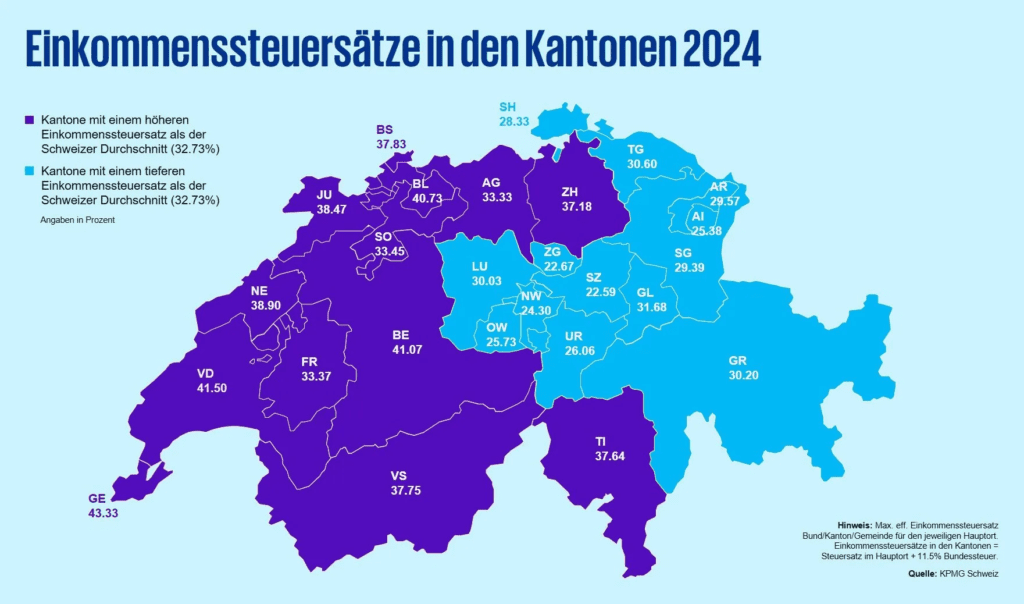
The cantons, on the other hand, have more freedom when it comes to taxes. Each canton has its own Own tax lawwhich makes the system so complicated. Assets, income etc. are treated differently from canton to canton. Always make sure that the information relates exactly to your canton when you are dealing with the subject of taxes!
The taxes payable are calculated annually via your Tax return determined. In contrast to Germany, for example, income tax is not withheld directly from your salary. You pay your due taxes retrospectively after submitting your tax return.
However, you do not have to pay the federal, cantonal and communal taxes separately, but pay them collectively to the canton, which then passes the taxes on to the federal and communal governments.




How much can I earn as a retiree in the canton of St.Gallen with a part-time job, tax-free and supplementary benefit per year?
To make things even more confusing: The withholding tax on dividends is also partially declared as withholding tax. Of course, this is not the withholding tax paid by persons with a permanent residence permit. The withholding tax on dividends varies depending on the country of origin. For my US stocks, 30% withholding tax is deducted from each dividend payment directly at Swissquote. These are then declared again in the tax return under withholding tax.