
 Skip to content
What do you have to keep in mind when you make withdrawals from a securities portfolio would like? Do you have to have a Dividend portfolio have? Or can you also from a non-distributing portfolio Withdrawals do? What is better and what should be considered in order to reduce the portfolio as little as possible.
You can find out about this and many other questions in this article.
There are a number of myths and misunderstandings surrounding the topic of capital withdrawals. Because contrary to popular belief, it is Not necessary to hold distributing securitiesif you want to live from the portfolio.
Depending on the investment strategy, a Dividend portfolio only makes limited sense anyway. This is because during asset accumulation, distributions in the form of dividends inhibit asset growth and thus slow down your asset accumulation.
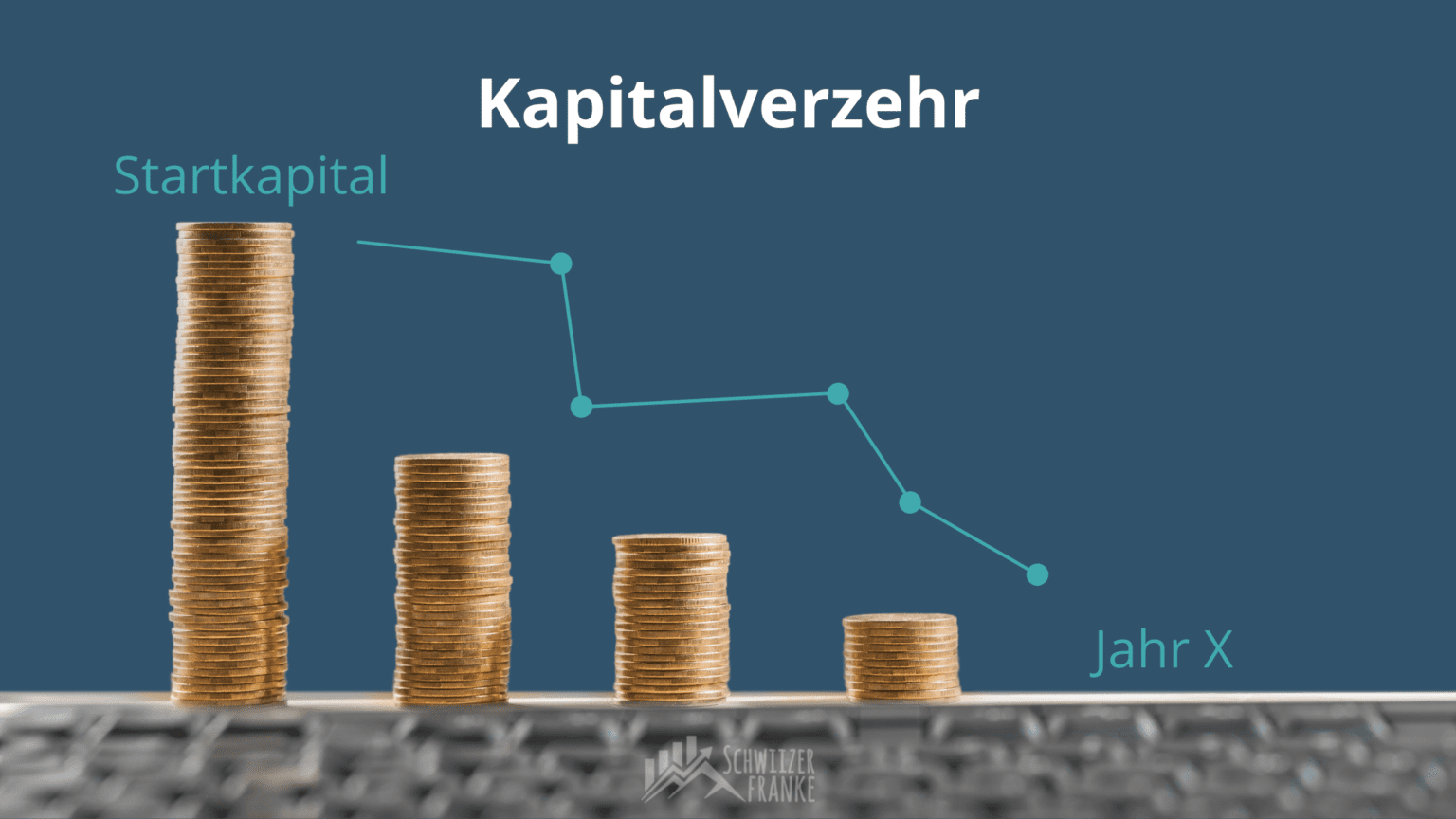
When day X is reached at some point, for example when you retire and you want to live off the deposit, at the latest then the so-called "retirement fund" will be created. Capital consumption a topic for you.
You could now switch to a distributing strategy and, for example distributing ETFs instead of accumulating ETFs use. But this is not necessary.
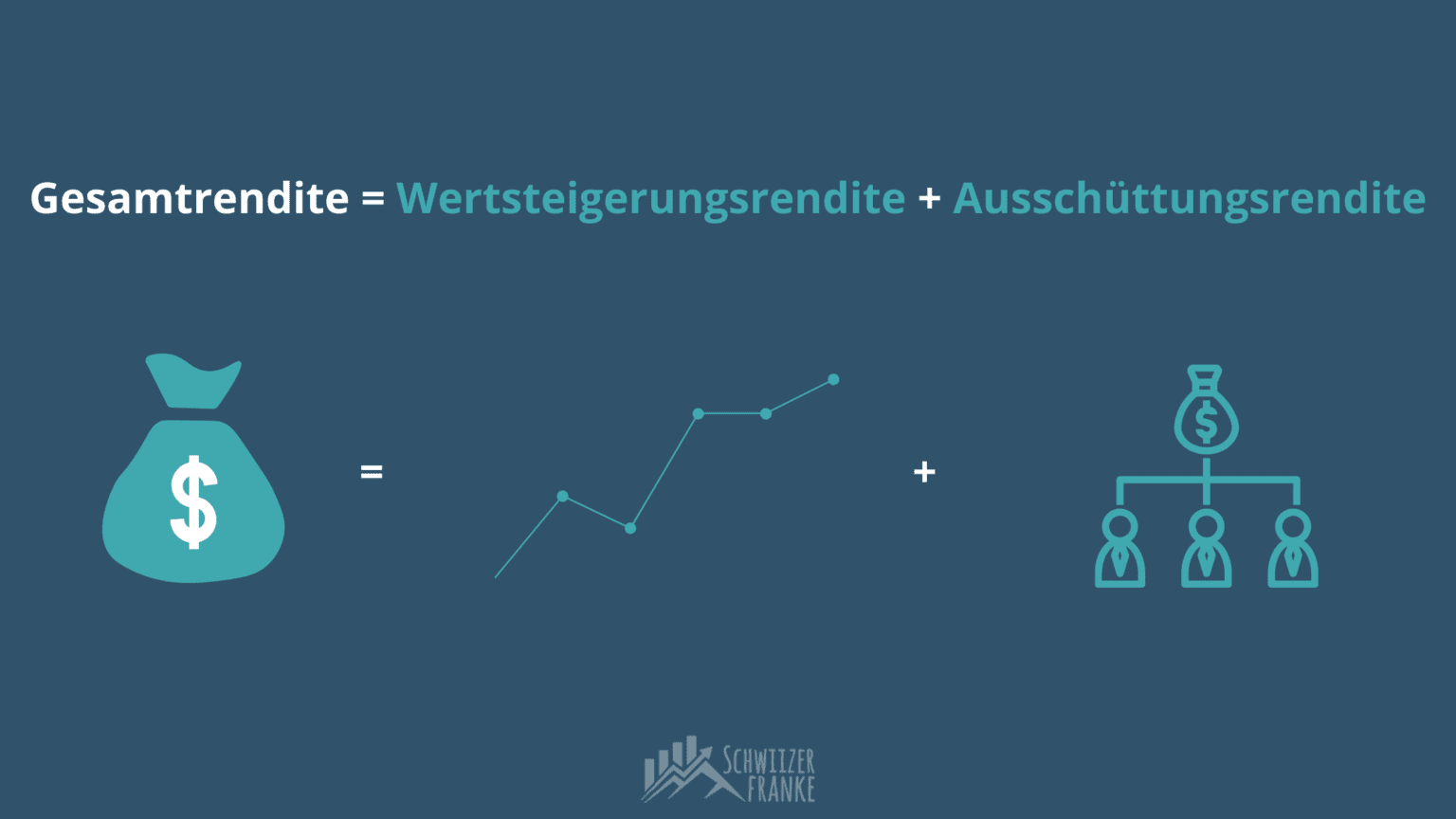
Economically it makes It makes no difference in which way withdrawals are made from a portfolio.. This is because the total return of a portfolio results from the distribution return and the appreciation return.
Total return = capital appreciation return + distribution return
So if you have a distributing portfolio the distribution of a Dividend your portfolio in exactly the same way as a withdrawal through a share sale from your portfolio.
The distributed dividend is in fact taken from the substance of the company and thus naturally slows down the future increase in the value of the company.
For us as investors, it is therefore irrelevant whether companies pay out dividends or whether we, on the other hand, sell our shares in the company.
Your key to success! Discover our top recommendations from real testimonials.





The Dividend strategy may have its arguments and certainly some supporters. However, for me at least, it is not part of my strategy.
At a young age, most people would rather build up assets. And in old age, when you want to live off the portfolio, a Dividend strategy not more advantageous than a non-distributing strategy.
Especially as it is very rarely possible to really live off the dividends and one is less flexible than if one simply sells the securities oneself.
Your key to success! Discover our top recommendations from real testimonials.
As can be clearly shown in calculations, you can slow down the consumption of capital if, when withdrawing capital, you apply a dynamic strategy apply.
This means that instead of withdrawing 1,000 francs from your portfolio every month, for example, it makes sense to withdraw a little more in good times and a little less in bad times on the stock market.
Through these dynamic extraction downward trends on the stock market are not accelerated by your sales. Calculations clearly show that this Very positive effects in the long term on your portfolio.
If you want to learn more about dynamic withdrawal and portfolio construction, you should check out the FinanceTimetable don't miss it!

Next start in autumn. Limited places. Therefore, sign up for the waiting list.
The 4% Rule was presented in a paper by William Bengen from the USA in 1994. He made calculations and showed that with a withdrawal of 4% plus the current inflation rate, no reduction was made to the portfolio over 30 years.
Thus a Permanent and secure withdrawal from the portfolio could be guaranteed for more than 30 years.
This rule of thumb is still known in many places today, but it is somewhat outdated. For example, because the Yield returnsso the yields on medium-term bonds are significantly lower today than they were back then.
Presumably the 4% today so rather 3.5% at a MSCI World plus a withdrawal in the amount of current inflation.
In the example this would be 3.5% + 2.5% for the amount of inflation = thus 6% withdrawal from a MSCI Word Portfoliowithout permanently diminishing the portfolio.
Since the MSCI World in recent years Returns of approx. 8% per year had made, the withdrawal would therefore have been safe in the long term and not harmful to the deposit.
Rules of thumb are not always correct. Accordingly, you can use the Financial freedom calculator at this point for more precise calculations.
"Intelligent people learn from the mistakes of others".
We have compiled our top selection for you from all our tests and experience reports:




For Withdrawals from your portfolio or if you want to live off your portfolio, it doesn't matter whether you distribute your securities or not.
So you don't have to switch to distributing ETFs or a dividend strategy at some point if you want to make a living from your portfolio.
In order to slow down the consumption of capital, a dynamic, rather than static, withdrawal strategy. You learned how this works in the article above.
Do you have any questions about withdrawal or the issue of living from the portfolio?
Feel free to leave a comment!
We use cookies to ensure that our free calculators and comparisons work perfectly. Statistics cookies also help us to improve the site for you. You decide - and can change them at any time.


Thank you very much Eric. Very good contribution. I also struggle with such questions. Dividends are popular because you still hold the same number of shares, even though the dividend is paid out. When you sell shares, you have the optical impression that your assets are decreasing.
For me, there are also tax issues: I pay tax on dividends, but not on capital gains. However, on accumulating ETFs I also have to pay tax on hypothetical distributions. Do I understand this correctly?
The comparison between distributing ETFs and accumulating ETFs would be a topic for your blog.
Thanks for your input Martin, I'll be happy to take up the idea for a blogpost!
Dear Eric, thank you very much. I am always thinking about how I will use my portfolio in my old age.
I have one comment on dynamic capital consumption.
If I choose a capital depletion variant, I calculate exactly how much money I need per year to live. Example: Let's say I need at least CHF 30,000 per year, i.e. CHF 2,500 per month.
You suggest withdrawing a little more in good times and a little less in bad times. What if these stock market periods last longer than I can wait with the withdrawal (because otherwise I will get into financial difficulties?).
Then this possibility would only be a supplement to my other income, because it is too risky?
Dear Helga,
Thank you for your message and the question!
First of all, dynamic withdrawal is not a concept I invented, but was designed by economists.
It is of course absolutely true that it is never possible to say exactly how long the cycles will last and in general: What is actually a good or bad time? What is the reference and how far does it go "up" or "down" 🙂 ...
The topic is not entirely simple and can best be explained in a video (small advertisement for the FinanceTimetablewhere we look at this in detail).
But to roughly answer your question in a nutshell: dynamic withdrawal only works with sufficient buffers and appropriate foresight. Going along the limit from year to year would not be feasible (unless you have a crystal ball that predicts stock market prices 🙂 ).
The technique therefore serves as a supplement and can make a considerable difference to your bottom line when used skilfully. Especially in bad years, a withdrawal is of course damaging for the portfolio and it recovers with corresponding difficulty.
I hope this brief explanation was able to provide some clarity 🙂
Hello Helga, I thought that dynamic withdrawal requires that you have a minimum budget and a comfort budget. In bad stock market times you limit yourself to the minimum budget, in normal stock market times you withdraw the comfort budget, and in exceptionally good stock market times you withdraw more than the comfort budget.
At least, that's how I plan to consume my assets in retirement.
I would like to apply a dynamic withdrawal strategy in future. I invest my capital in world equity ETFs (VWRL) and possibly a (small) portion in Bitcoin (max. 10%).
I plan to consume 0.5% of the current portfolio value every month (or 1% every 2 months). In this way, the value to be consumed fluctuates every month, but the money lasts forever (the capital even increases slightly; assumption: shares have an average annual performance of at least 7%).