













FAQ
Yes, Schwiizerfranke has its own Individual taxation calculator, which you can use to calculate directly how much you will pay as a married couple under the new system compared to today. For cantonal taxes, each canton also offers a free tax calculator.
The info about the current The second earner deduction or double earner deduction in Zurich and other cantons can be found in the cantonal guidelines. You can find these via Google.
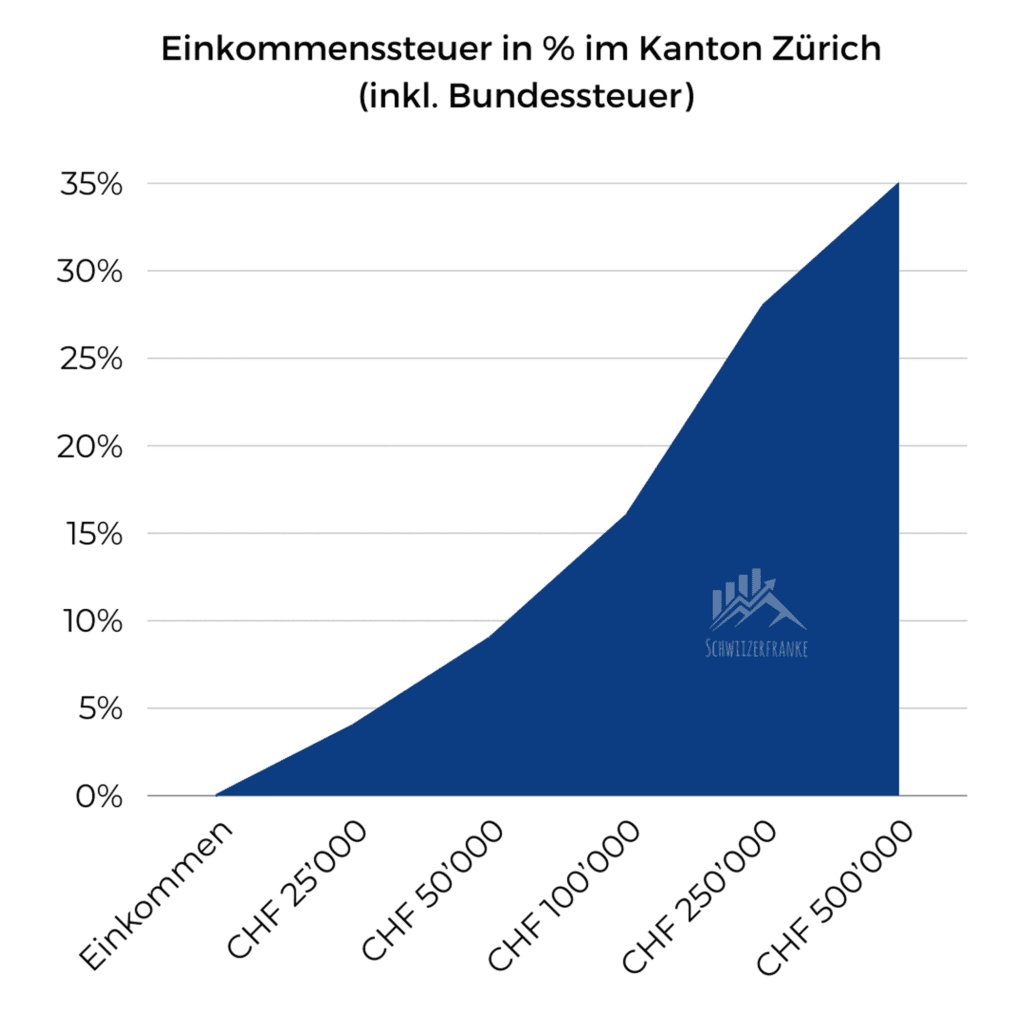
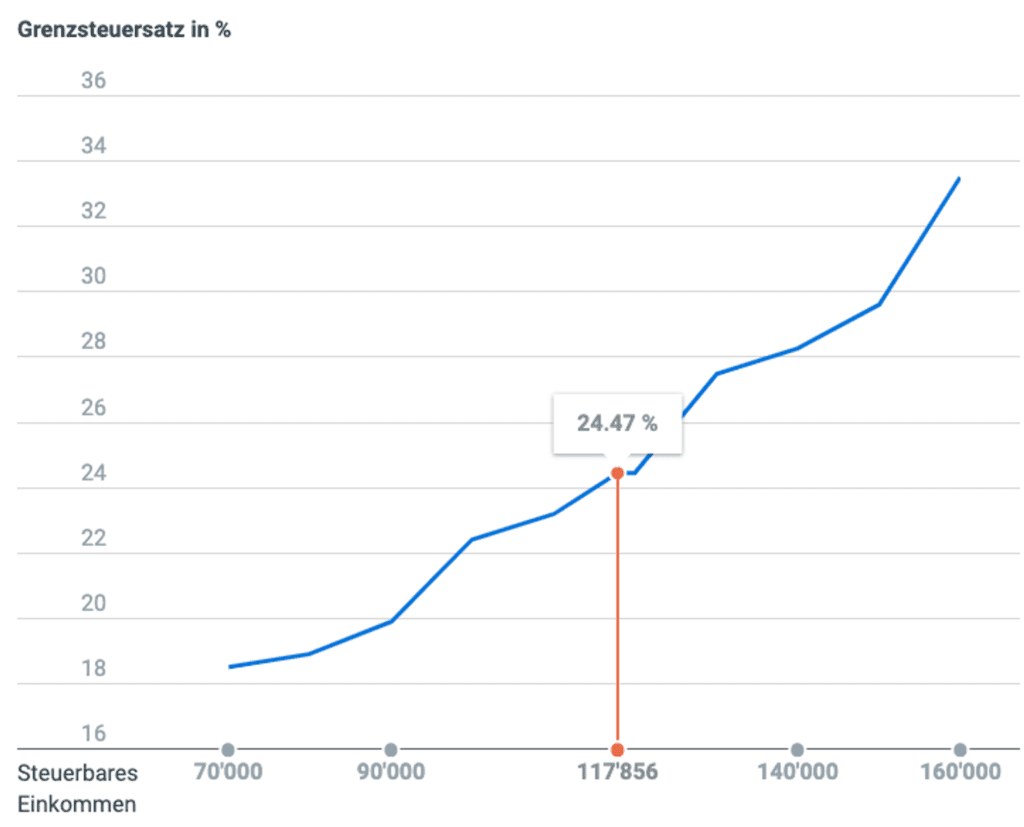
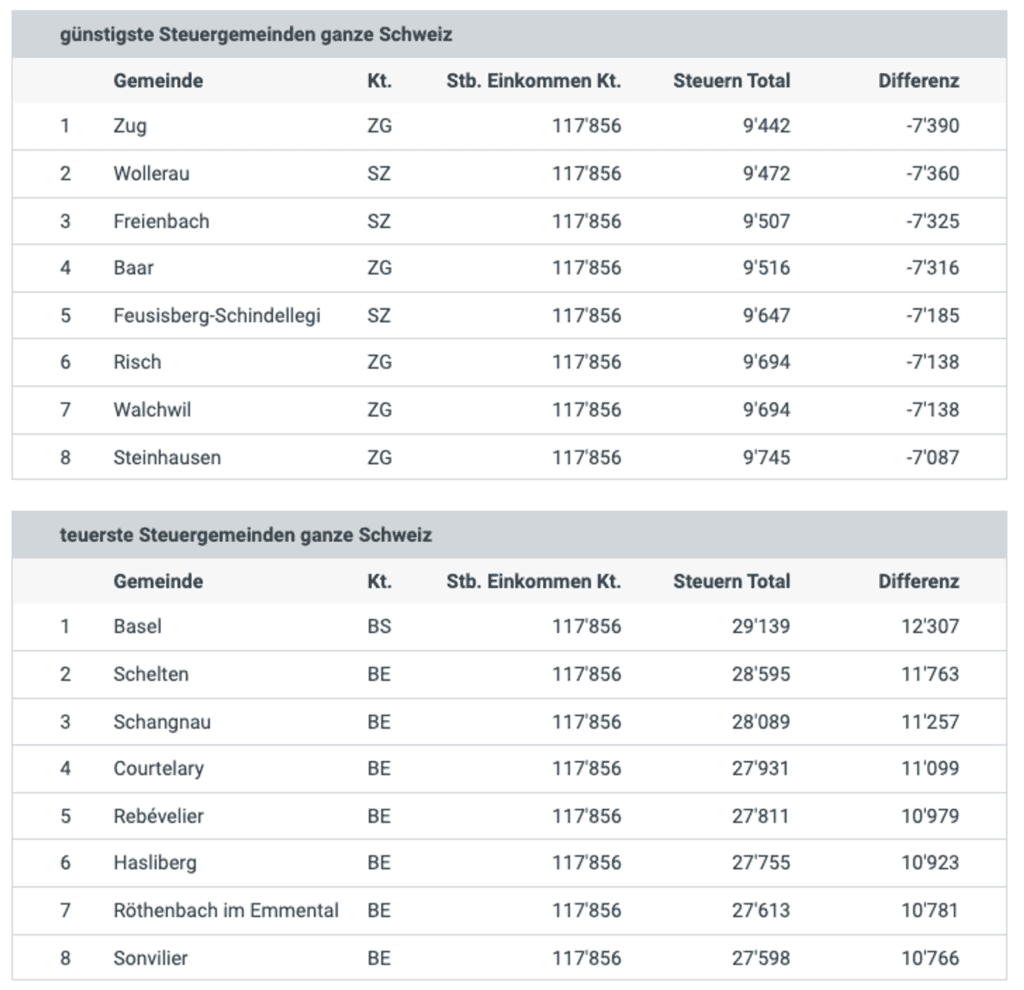
The tax progression throughout Switzerland always depends on the canton and the respective municipality. Above you have seen some examples and a progression table.
If you live the traditional family model and your partner cannot earn a high income due to education or opportunities, you will be penalised with higher federal taxes after the abolition of the "marriage penalty*, as the child deduction will be shared as an example.
As decided by the Council of States, this cannot be accepted. High-earning dual-income couples will be in a much better position. It cannot be that they will then pay less federal tax than a single earner who bears the entire family burden with their income.
Fortunately, the last word has not yet been spoken!
Your comment sums it up perfectly. Couples who currently earn less together, where one part earns a lot and the other earns little, will be penalised for this in the future. The high-earning partner usually finances the main part of the family. In most cases, such couples also have children and are dependent on the money. The DINKS, on the other hand, will be able to afford much, much more than they can today. In my view, this is a classic blunder by the federal government and then by the so-called «sovereign», who have all thought very short-sightedly. The centre would have had a fair initiative at the start. Unfortunately, the Federal Council did not see fit to put it to the vote instead of the unfair SP/FDP initiative. The existing unfairness is being replaced by a new one. To be honest, I am very disappointed.
We are a retired couple. Total income (AHV, pension fund pension): CHF 114,576, taxable income CHF 111,500, taxable assets CHF 33,000.
Taxes: CHF 13,058 (canton/municipality/church) / CHF 2,555 (direct federal tax) / Total: CHF 15,613.
Questions:
a)How is the income divided?
b)Which tax rate is applied?
c)Does individual taxation not penalise retired couples?
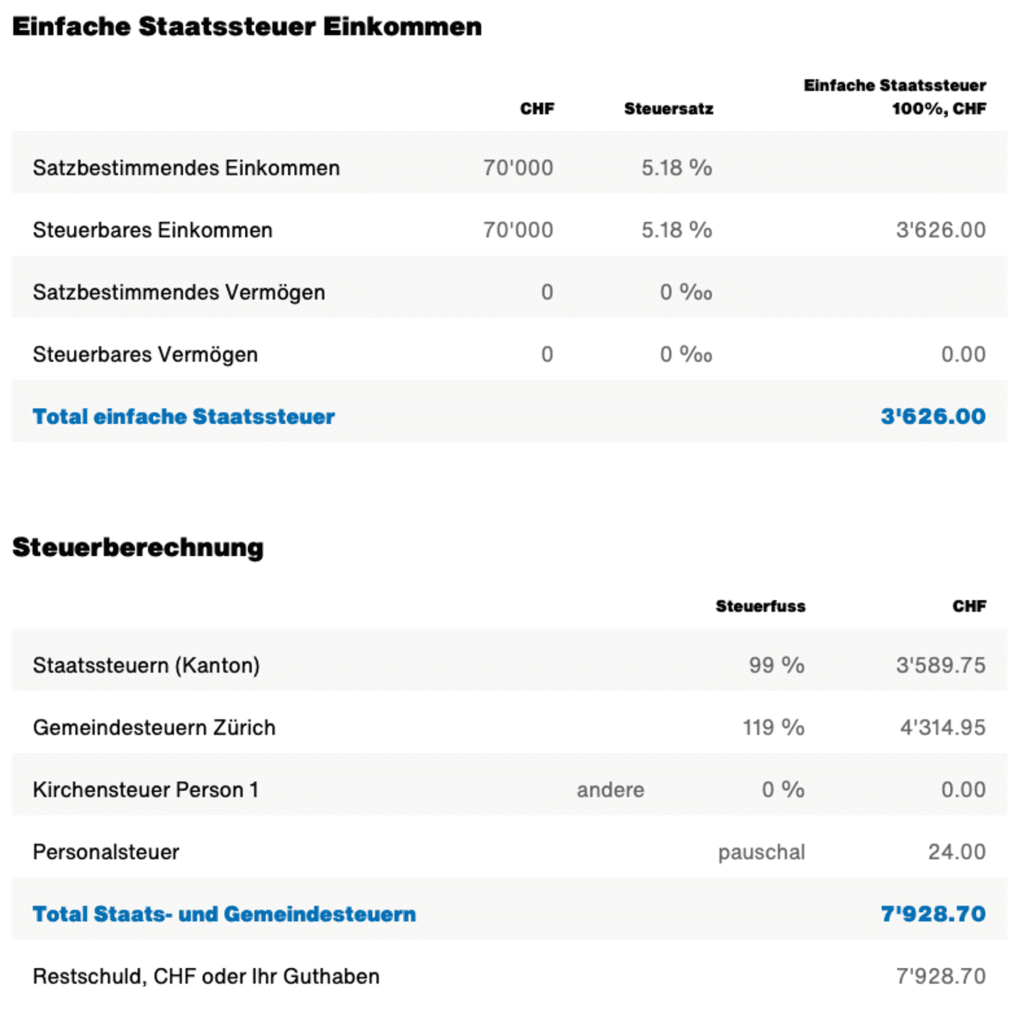
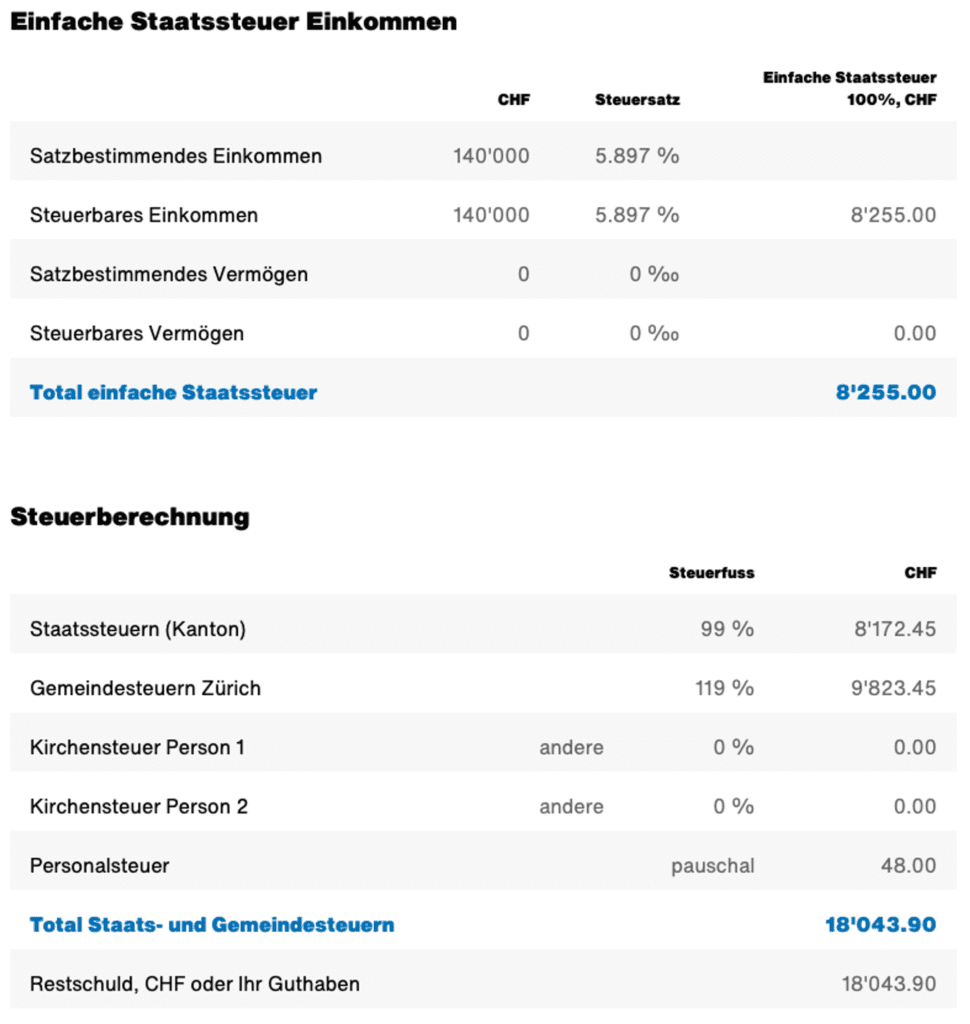
A brief addition to your text. You write: "In order to calculate the marriage penalty, we consider a couple from the city of Zurich who both receive a salary of CHF 70,000 per year. Their incomes are therefore not yet exceptionally high, close to the median salary." It is important to understand that this is not the salary that is paid out, but the taxable income. That is a big difference and puts the statement about the median salary into perspective. Someone can also earn 120,000 a year (salary) and achieve a taxable income of CHF 70,000 by buying into a pension fund, paying into 3a, continuing education, etc.
Thanks for the addition!
As you say, taxable income can also be reduced (more here) ... Or you do nothing of the sort and the couple simply earn 70t francs each.
Of course, the two salaries cannot simply be added together and considered the same, as the second earner deduction is used ... the comparison is therefore simplified, but shows the problem 🙂
Oli agrees; with a net salary of CHF 70,000, the taxable income will be lower due to the deductions. In addition, the individual taxable incomes of a cohabiting couple cannot simply be added together. As indicated in the text itself, the taxable income of spouses who live in a legally and actually unseparated marriage must be reduced by the special deduction for gainful employment of both spouses (two-earner deduction) (in the canton of Zurich: max. CHF 5,900).
The above example would therefore come closer to reality if, for example, personal deductions of CHF 20,000 each were assumed and the tax amount resulting from a taxable income of CHF 50,000 each were compared with the tax amount that would result for a married couple based on a taxable income of CHF 94,100 (2x CHF 70,000 - 2x CHF 20,000 - CHF 5,900). This would also result in an additional burden for the couple, but the difference would only amount to around CHF 520.
Incidentally, the linked "federal study" shows that the marriage penalty is primarily a problem of direct federal taxes (note on the rate structure: the canton of Zurich applies a double rate analogous to the federal government). As described in the text, the marriage penalty "does not exist everywhere and especially not everywhere to the same extent". In addition to the question of how income is distributed between the partners, this must also be seen against the background that the cantons of SZ, NW, GL, FR, SO, BL, SH, AI, SG, GR, AG, TG, NE and GE do not have a double rate for family taxation, but apply full or partial splitting. The problem of the marriage penalty could therefore also be solved for direct federal taxes using this method. It is therefore also understandable that the cantons are opposed to the introduction of individual taxation due to the greater additional administrative burden.
@Marc: The figures from your example would probably not be entirely accurate in practice. The average citizen will not be able to claim such high deductions on such a taxable income 😀